
Off the Cretan track – The Guardian

Download Whole Article From The Guardian
Tourists went for the beaches and the Palace of Knossos. Then they discovered the Samaria gorge, in large numbers. Nicky Holford heads further afield, beyond the Iron Gates, to find solitary splendour in the White Mountains
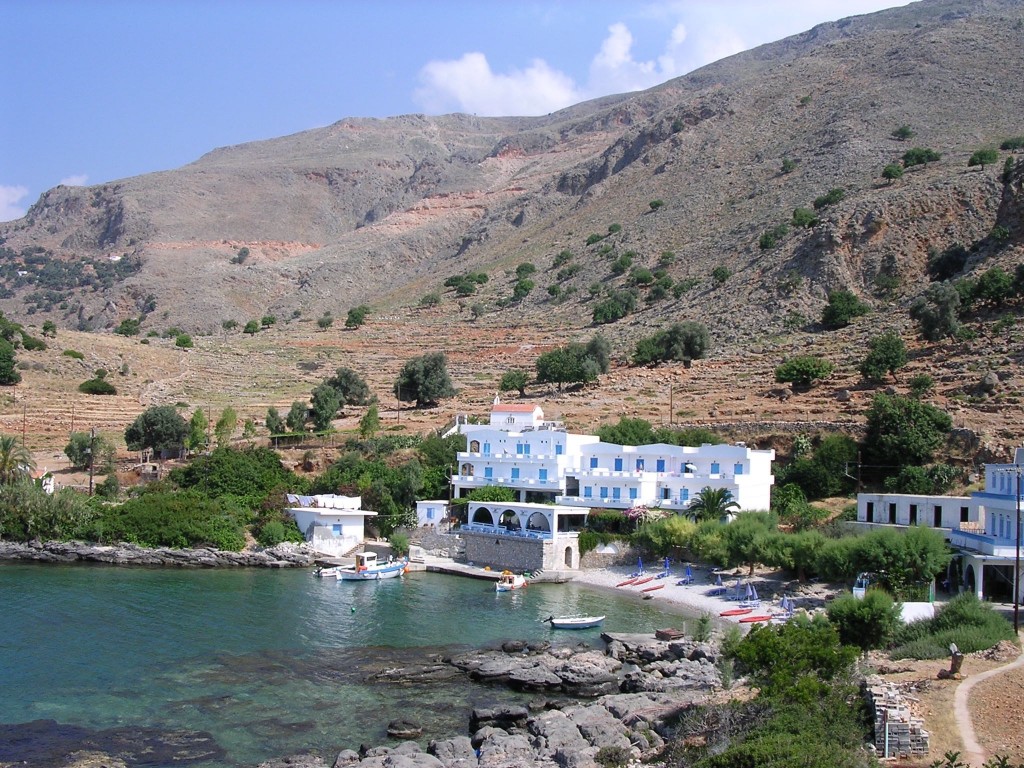
At 6am there was no sign of dawn. The air was blissfully warm and the sky studded with stars as Sifi helped us into his small boat. For the cost of the petrol, he was taking us to the nearest road an hour away at Hora Sfakion and the 7am bus, back to civilisation. We had rented one of his rooms in Finix, once known as Finikas, a major town and important port during the Roman and Byzantine times, now a few small buildings hugging a rugged coastline
Out at sea, in the dark, the silhouettes of the mountains rose high into the sky. Beyond them lay Pagnes, the highest mountain in the Lefka Ori (White Mountains) range, where only a few days ago we had watched the sun die and rise in a show of colour on its rocky slopes as the wind whipped around our sleeping bags at its barren base. The idea to cross the White Mountains in Western Crete first came to me on the deck of a crowded ferry boat taking hundreds of walkers who had just completed the 18km (11.2 mile) hike down the Samaria gorge from Agia Roumeli to their waiting coaches at Hora Sfakion. I too had completed this epic walk seduced by the guidebook’s description, its promises of spectacular scenery, the challenge and final sense of achievement.
As a tourist attraction, it comes second only to the extraordinary Palace of Knossos, the largest of the Minoan palaces excavated by Sir Arthur Evans at the turn of the century. Europe’s longest gorge leads from the mountains to the clear turquoise waters of the Libyan sea over dry river beds and trickling streams, through forests of scented pines and the “Iron Gates”, the narrowest point where the rocks on either side are 600m high. It is beautiful – but not when there are coachloads of sweaty tourists squeezing down the narrow gorge. The unfit and inappropriately-footed occasionally having to be rescued by mules situated at strategic points in the gorge.
On the returning ferry, deep out at sea, I could see beyond the coastal range of Crete’s rocky mountains to where the White Mountains dramatically pierce the sky. It is the limestone that gives them their name and, from a distance against the deep blue sky, the bleached rock looks like snow. This, I decided,would be far enough off the beaten track to enjoy to enjoy Crete’s mountainous region in isolation.
It was hard to find details of the walk and impossible to find a map with a large enough scale of the mountains. Apparently, the best map is a Greek military issue, but the only copy we hoped to gain access to, at the Kallergi hut where we would spend the first night, had been stolen. The walk across the mountains from Omalos to Anapoli takes 15 hours over two days with the highest point at 2,133m at Melindaou. The best time of year to do it is in May, June, the end of September and October.
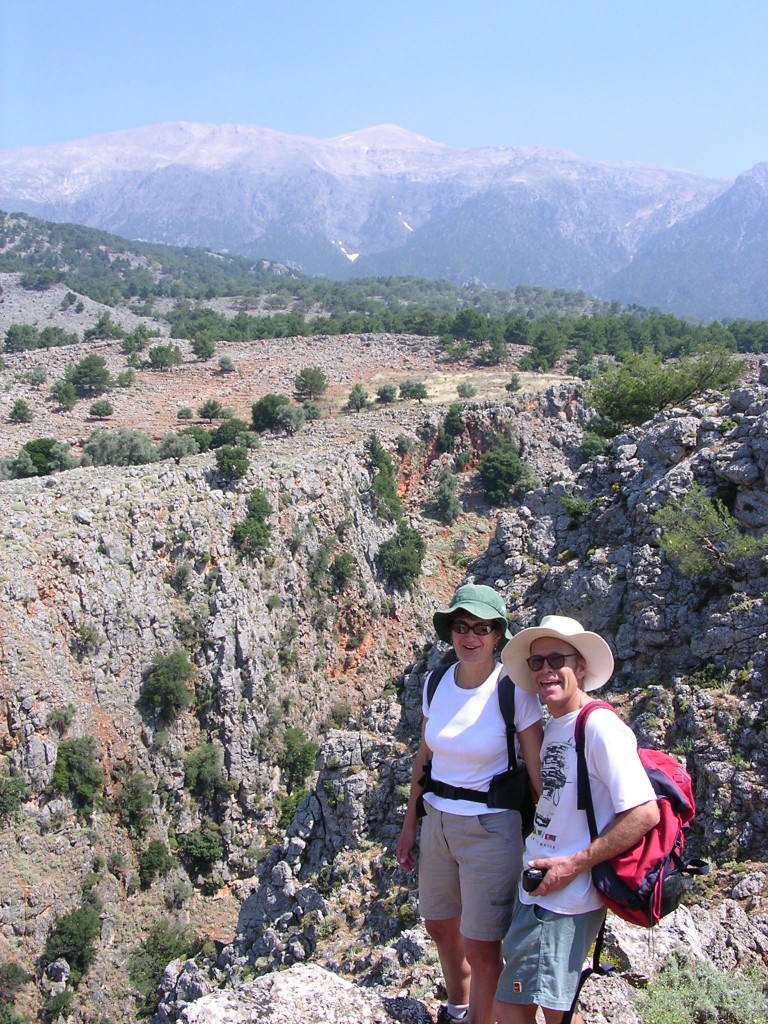 This south-western part of Crete has many excellentand uncrowded gorge and coastal walks varying in time from an hour to six hours. I had never embarked on the commitment of a two-day hike before, but realised that spending the night at 2,000m would take some careful planning and the right equipment. Weight became an important factor. We’d have to carry three litres of water as temperatures during the day could reach over 80F and the first water was six hours away.
As we would be sleeping out for only one night, we decided against the extra weight of a tent and cooking equipment. We needed food for three meals and loaded up on high-energy foods such as dried fruit and nuts, energy bars and vacuum-packed salami, planning to supplement our supplies with local bread and cheese. Our security if the night was cold was a small flask of whisky.
Another priority was footwear. The year before, I’d lost a toenail wearing tried-and-tested boots. The Cretan mountainside is rugged and rocky with many steep pitches of scree (loose stones). Toes are thrust violently into the front of boots, so you need a lot of extra room.
Our base was the tiny cove of Finix, 15 minutes over the hill from Loutro, a pretty harbour with tavernas, small pensions and no cars, on the ferry route and one hour from the foothills of the mountains at Anapoli. From Loutro, we took the two-hour ferry to Sougia, arriving a couple of hours after the last bus. Fortunately, we were able to share a taxi to Omalos costing £8 instead of the usual £25. If you do not have to leave luggage anywhere, a simpler route would be to take a bus from Hania – there are four a day – to Omalos.
We were deposited at a dusty dirt track with switchbacks disappearing high into the mountains. The sun was setting and our walk to the Kallergi hut would take one and a half to two hours. The sun set and the sky burst into ever deepening shades of pink, then gradually drifted into night.
Soon, it was almost pitch black with a few pinpricks of light from the villages below and the looming shapes of the mountains. It was steep and there always seemed to be another bend. Finally, we reached the col and saw the hut, its lights ablaze and generator purring. We’d missed a hot chicken dinner but there was wine and the hut was warm and tidy with separate bunk bedrooms and two large dormitories.Lights out was at 10pm.
Before dawn, the hut hummed with the sound of activity. Our modest breakfast was shared around a multinational table – Dutch, German, French. At 7.45am, we filled our water containers and stepped into the low sun. We passed the outhouse perched precariously at 1,700m overlooking the gorge and headed for the first E4 (European rambler trail) marker.
Following a rough road, used by shepherds, we passed a collection of beehives and headed to the trailhead, taking a short diversion to look at the Samaria gorge, which appeared green and fertile unlike our golden rocky terrain.
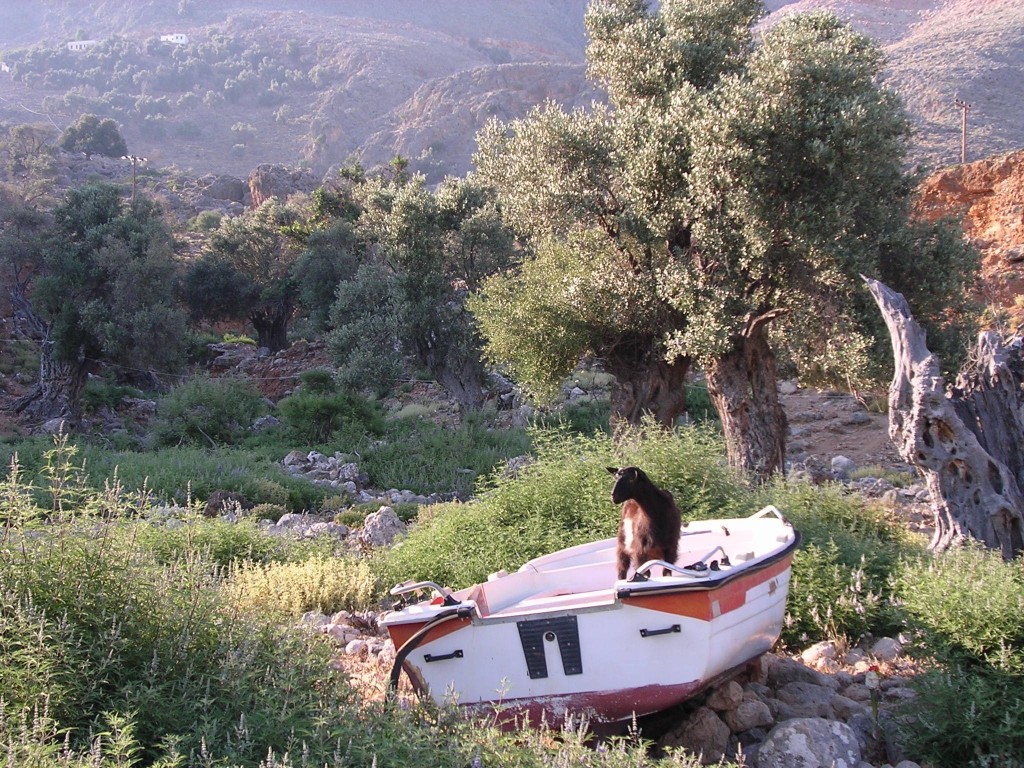
Heading into the mountains, we were quite alone, the air was fresh and so different from the overpowering smell of wild thyme by the coast. At first, there were no birds and no clouds. You could see both coasts of the island, the Gulf of Hania where the Germans landed during the second world war on one side and the ferry route we had taken on the other. The only sound was a hint of wind or a loose rock rattling down the mountain.
The climb quickly took us into the heart of the White Mountains. With each ridge crossed, new views of other, higher mountains slid into place, the green of trees below us overtaken by a more barren rocky landscape changing in colour as the sun bounced off the rocks on its westward journey.
High on a windy ridge, we saw two golden eagles circling above as we reached our highest point at Melindaou. To start with, the route was well marked by black and yellow E4 markers, and they became a lifeline. Sometimes, you had to scan the landscape to pick them up among the limestone. Often they would be flagless poles, having been used as targets by the shepherds.
We reached our night spot, Katsevelli, in good time. It was a sheltered valley with a couple of shepherds’ huts and our first water. We decided to head on to the base of Pagnes, another hour and a half, which seemed longer, across a rockier and more brutal landscape. It was much higher and consequently colder than Katseveli. There were several stone bivouac shelters and a small shepherd’s hut.
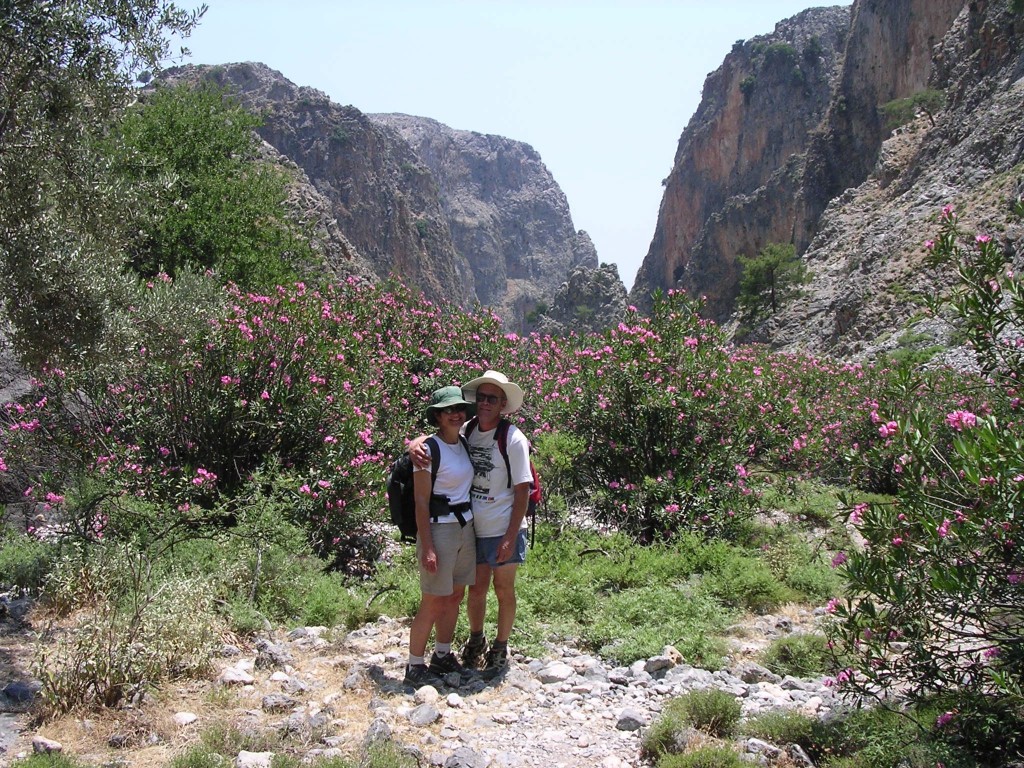
Away from the flightpath of Heathrow and the constant noise of London, we briefly delighted in the quiet isolation. One by one the stars appeared until there were so many it was barely dark. All day we had seen no one except a lone shepherd and his dog, heard nothing but silence and our boots on the rocky terrain. But then the wind picked up and howled. We shivered, exposed in our sleeping bags and, despite thermal underwear and woolly hats, we had to beat a hasty retreat to the small, stone shepherd’s hut.
The dawn light turned the White Mountains gold. We set off into an almost lunar landscape. In parts, the stone was black, like a volcanic crater. After a couple of hours, we started to see signs of civilisation, sheep and goats and the start of a new untracked road. Our trail led through a canyon along scrub oak and cypresses. As we descended, we reached a pine forest and open valley where we could see Anapoli far in the distance.
The going was hard, scree almost to the valley floor. The Tarmac road as we reached Anapoli was as smooth velvet by comparison. We came to a bus stop and a small square with a bust of Dhaskaloyannis (an unsuccessful opponent of the Ottoman rule). An omelette (unfortunately a favourite with wasps) and Coke never tasted so good.
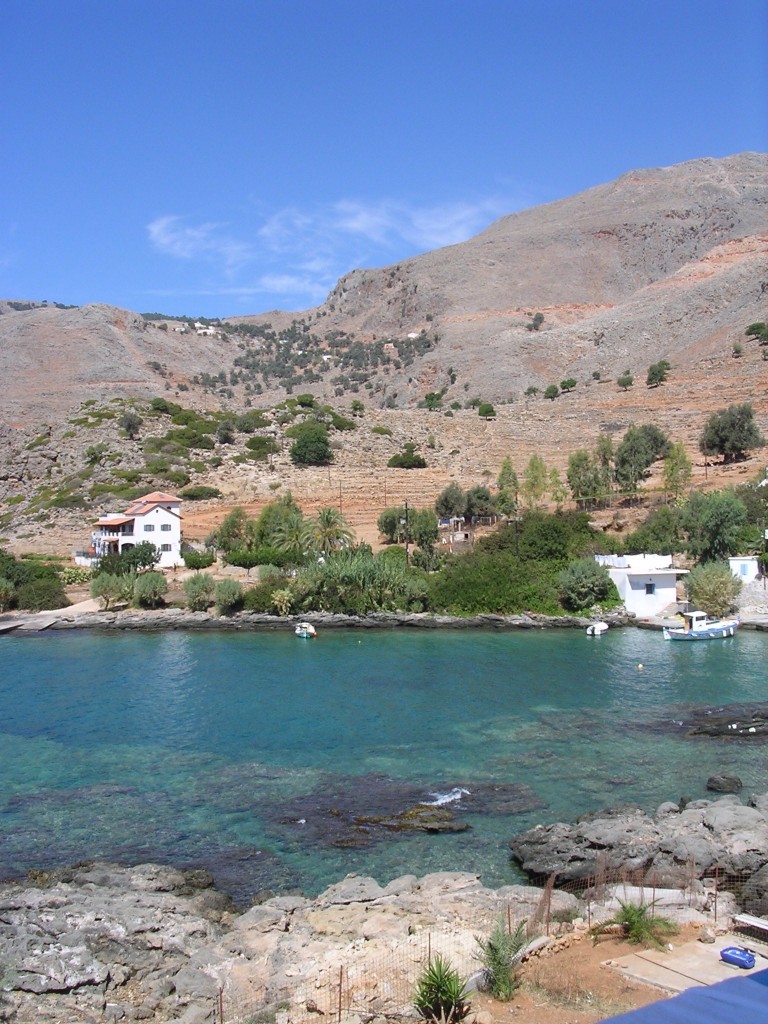
A rough path over boulders and golden earth led us to our last steep climb and a small monastery. From the top, the sea below fanned out in ribbons of turquoise to the horizon while the little village of Loutro lay tucked tightly into a cove. The switchbacks were steep and narrow as we descended towards Loutro and crossed a ravine leading to Finix. The clatter of goat bells was a welcoming sound, but heaven was diving into the warm sea, feeling the salt water wash away the sweat and the dirt, and gently massage my aching feet.